


Introduction
career guidance for students Choosing a career is one of those decisions that feels impossible to get right at the age of eighteen or nineteen. There are many courses to choose from, too many colleges to consider and too many careers that did not even exist a decade ago. The job market keeps shifting beneath all of it. Confusion is basically the default state not the exception. That is why career guidance, for students matters so much. When career guidance is done well it helps a person truly understand their interests and strengths before they commit to a career they barely understand.
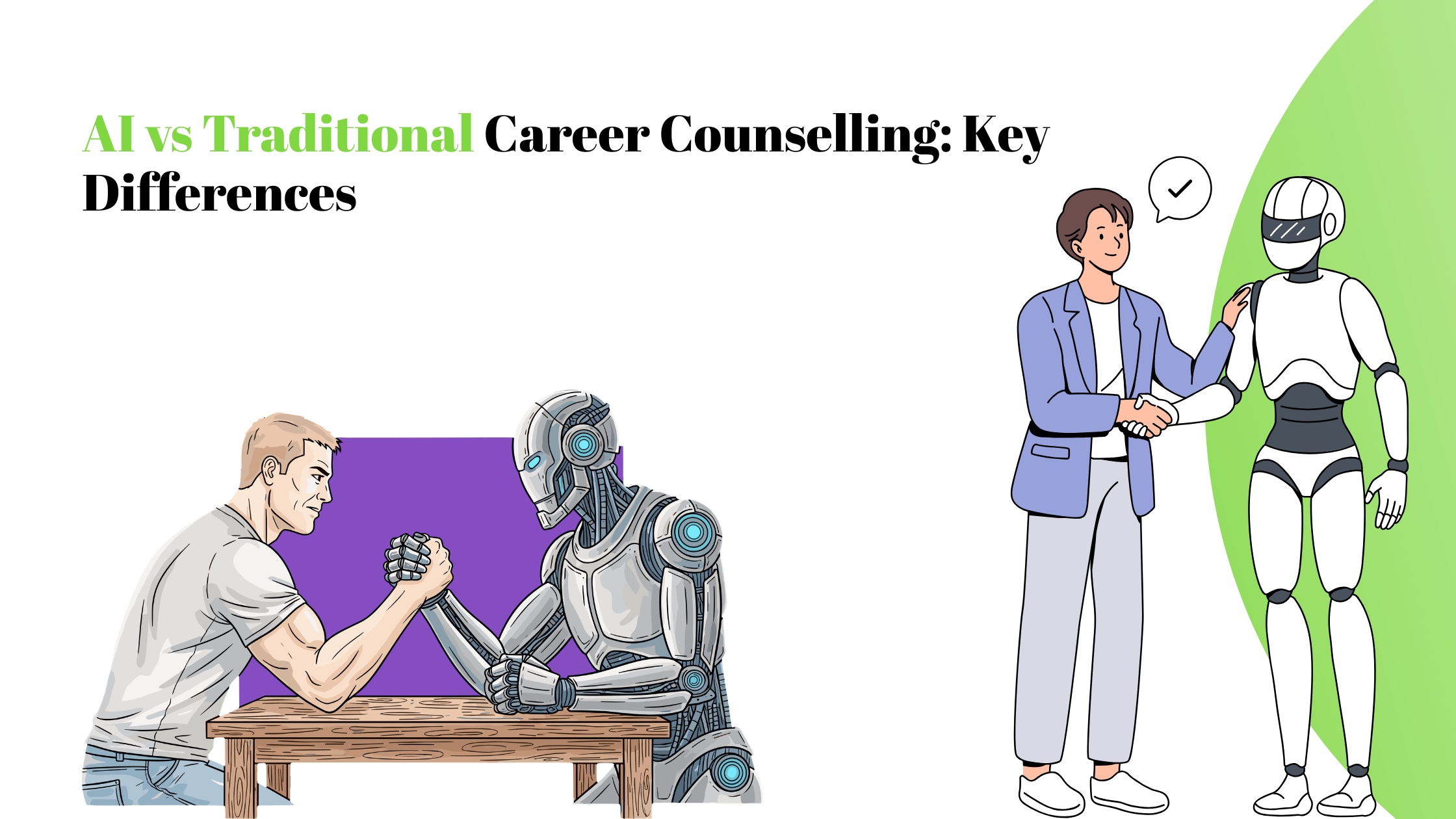
Students today get that guidance in two pretty different ways. There’s the traditional route an actual conversation with a teacher, counsellor, or someone experienced in the field. And then there’s the newer option, AI tools that generate suggestions based on whatever information a student types in. Both have their place. They’re just not interchangeable, and treating them as the same thing tends to backfire.
What Traditional Counselling Actually Looks Like
This is a conversation, not a form to fill out. A counsellor sits down with a student and talks through performance, interests, strengths worries whatever is actually going on in that student’s head at the time.
A good counsellor does not simply say a job title. Consider it finished. They take time to get to know the person sitting across from them before giving any advice. That exchange is truly the strength of old-fashioned career help, for students.

How AI Tools Approach the Same Problem
AI career tools don’t start with a conversation. They start with a form interests, skills, academic preferences, maybe a loose idea of where you’d like to end up and from that, a list of suggested courses or careers comes back.
That speed is actually the whole appeal. Someone who just wants to poke around a bunch of options without committing to anything yet can get through a dozen possibilities in the time it’d take to book one appointment. Career guidance for students For career guidance for students at the very start of their search, that’s genuinely worth something.
The problem is everything a form can’t capture. AI doesn’t know why a student answered the way they did. Two students could enter nearly the same interests on paper and still be living completely different realities one dealing with family pressure to pick something “respectable,” another constrained by money, a third just unsure what they even want. None of that context makes it into a dropdown menu.

So Which One Should a Student Actually Use?
Honestly there’s no answer here and anyone who says there is probably isn’t seeing the full picture. If you’re looking for facts and a broad overview AI can give you that just fine.. If you need something deeper something tailored to your own situation then talking with a real counsellor who has experience makes all the difference.
That balance. Between info and personal insight. Is what changes career guidance for students, from a theory into something that actually helps them move forward.
Why Doing Your Own Digging Still Matters
Whichever route a student takes, personal research still has to happen. Nobody should be making a career decision off one AI suggestion or one counselling session alone that’s too much weight on too little information.
Dig into actual university courses, admission requirements, what the job market for a given field actually looks like, what skills different professions genuinely demand, and where industries seem to be heading. Talk to teachers, working professionals, family, counsellors whoever’s actually relevant and willing to give an honest answer.
Good career guidance for students should push someone toward thinking for themselves, not hand them a verdict and expect them to just accept it.
Conculsion
AI’s changing how students explore career options, no question there. But traditional counselling hasn’t become obsolete because of it if anything, the two complement each other better than either works alone. Technology gets you fast suggestions. A real counsellor gets you understood.
In the end, the decision still has to come from the student themselves their interests, their strengths, and a clear enough sense of what they want to build a career around. Good career guidance for students should always circle back to that. The student’s own goals. Not someone else’s idea of the right path for them.